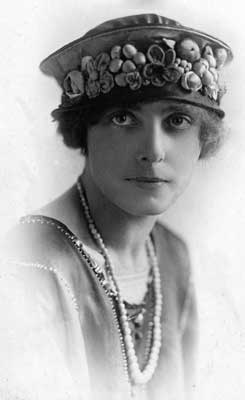
Clytie was generally known as "Renee" to her friends. The towns she lived in Australia are covered fully under her parents "Notes". While at Stanthorpe she went to the Convent School [c 1890].
1884 Queensland Birth Certificate
1902 Clytie and her mother sailed from Townsville and visited their Cartledge relatives in Launceston, Tasmania, all of whom were descendants of James and John Cartledge, step-brothers of William Cartlidge, Clytie's grandfather. The two brothers migrated to Van Diemen's Land in 1844. William, in the Royal Marines, remained in England.
1903 Clytie left Townsville for London via Cape Town on a sailing ship. She would be 18 years of age at the time and was sent under the care of the Captain arriving at Bournemouth just before Christmas 1903.
1904 as a "live in" with a French speaking family at Lausanne, Switzerland, she went to live with her Hunt relatives in England who lived in the Hanley, Stoke-on-Trent area of Staffordshire. These were her father's brothers Alfred and Percy and his sister Emily [who had returned from Toowoomba] and their families. Albert and his wife lived at Poole near Bournemouth, Dorset, whom she visited at times. It could be here that she met her future husband Cecil.
1906 Mar 22. After her marriage to Cecil Arthur Blake she lived mostly in London where she worked at Secretarial positions in order to bring in more income. In 1910 she lived at 13 Grenville Place, London. (near South Kensington). She travelled extensively both in Britain and on the Continent, Bavaria in Germany being her favourite area. She had a wide range of interesting friends, something she missed upon her return to Australia.
1911 She is living as a "single" woman at 15 Hunter St, St Pancras, London. She states she is single and a shorthand typist. and is using her middle name Irene

She became interested in the women's suffragette movement, Theosophy
These are living at Long Street, Williton in 1911 census


1914. during the World War I period she became a V. A. D. [Voluntary Aid Defence] helping in hospitals voluntarily during 1915-18 for wounded Australian soldiers in London for which she received a V. A. D. medal after the war. She also helped at the Australian Canteen, London, serving out teas etc to Australian soldiers on leave from France in London. It was here that she eventually met her second husband to be, Rupert George Young.
Because of the German bombing of London in 1917, where she lived, and being thrown to the ground by one blast, she wrote that she decided to go to Williton, Somerset, to have her baby Peter Williton Blake, who was born there on 3 April 1918. The Zeppelin bombing of London had virtually ceased by this time. There had been a raid on 1 Oct 1916, and the next one was a year later in 19 Oct 1917. The 1917 raid was when a Zeppelin sent to bomb another city wandered off course and dumped its bombs. The first few fell on Hendon Aerodrome but the rest, dropped at random from 16,000 feet, struck in Piccadilly, Camberwell and Hither Green
1918 Jul/Sep She married Rupert George Young, an Australian, in UK
1920 Jan 3. She returned to Australia with Peter and her second husband. Upon their arrival in Sydney in February 1920 from England Clytie Irene and son Peter stayed in Sydney while her husband Rupert George lived with his parents in Brisbane and completed his studies at the Bar to become a Barrister.
About July 1921 Clytie saw in the "Illustrated London News" 28 May 1921 issue that her ex-husband Cecil Arthur Maurice Blake, his second wife and two British Army officers had been brutally murdered by the IRA on 15 May 1921 in Ireland. She contacted Sydney Solicitors Minter, Simpson & Co to see if her son Peter was entitled to any money from his father's estate. Peter has an envelope postmarked Dublin 23 February 1922 which is addressed to Mrs Young at "Edgehill", 8 Bower Street, Manly, Sydney, N.S.W. proving that Clytie was still living in Sydney in March 1922.
A postcard sent to her from England postmarked Whitby 29 August 1922 was addressed to Mrs R. Young, "Auldbar", Dorris Street, West End, Brisbane, Queensland, Australia (the home of Rupert's parents where he was staying). Clytie and son Peter must have moved to Brisbane around the middle of 1922. It is not known where they lived in Brisbane between 1922 and 1924. At the end of 1924 they rented a home in Howard Street, Bayswater, later known as Milton and then Rosalie, from a Mrs Molle Raff who lived in a home next door. Around late 1925 they decided to purchase the Howard Street home from Mrs Raff who wanted 1,100 pounds for it. Rupert borrowed 400 pounds from Clytie's mother, Mary Ann Hunt, who had returned to Australia in 1924 and was living in Sydney at "Edgehill", 8 Bower Street, Manly, Sydney, the home her daughter had previously rented from a Mr Sellers who lived next door and which she had then rented for her mother. In return for the 400 pounds Rupert gave Mary Ann Hunt a promissory note for the same amount, it being a loan. With this money and a mortgage from the Brisbane Permanent Building Society Rupert and Clytie were able to purchase the Howard Street home which they later called "Wilga". It was a happy marriage up until early 1927, Clytie entertaining friends at her home, she having help in the home and in the large half acre of land. All this was to come tragically to an end with the Wharton Divorce case in 1927 when Mr Wharton of Kamarooka properties, Western Queensland, brought a divorce action against his wife Linda Wharton, citing Rupert George Young as co-respondent which he won with costs and with the costly but unsuccessful appeal by the respondent Mrs Wharton and co-respondent R.G.Young against the plaintiff. Fuller details of the case is included in the "Notes for Rupert George Young" section. Clytie Irene's marriage had many ups and downs after the divorce case. For some reason she did not divorce Rupert as she did Cecil. Rupert dishonoured the 400 pound promissory note, which could not be enforced because it had not been stamped by the Stamp Duties Office. Clytie had to buy out Rupert's half share in the Howard Street property which the bankruptcy receiver had valued at 400 pounds. The joint ownership was not "tenants in common". To do this she had to increase her home mortgage with the Brisbane Permanent Building Society by 400 pounds, this increasing her monthly repayments causing great financial hardship over many years. Over the ensuing years she tried to repay some of the 400 pounds her Mother Mary Ann Hunt had lost, it being her life's savings. Frequent arguments broke out between Clytie and Rupert. When he went to Gayndah he tried to make her sell her home and live permanently in Gayndah. This she refused to do as she thought that she would loose her financial independence, the home then being in her name. She did go to Gayndah for short stays a number of times and she often went to the Titles Office in Brisbane searching legal documents for Rupert's work at Gayndah. The marriage finally broke up in 1932 when she was at Gayndah and caught Rupert in comprising circumstances with Miss Don, a local school teacher. From this she was able to get a legal separation and he could no longer force her to go to Gayndah. She also obtained a Court order for him to pay a weekly maintenance to her (around 25 shillings - $2.50 - per week). Rupert very often was up to six months in arrears which caused great financial hardship to Clytie and she would have to take Court action to have the arrears paid. Being a Solicitor, he used every trick to get out of his legal obligations. In order to survive she let half of her home, bred foxterrier puppies for sale, sold hens eggs and for three months ran a childrens' bed-time session on radio station 4QG under the name of "Queen Mabs". When Rupert heard of this he cut off her maintenance so she had to cease the radio session. Rupert also refused to contribute to the education of her son Peter. For these reasons Peter in adult life had a very low opinion of Rupert George Young.
As stated previously, upon learning of the murder of her ex-husband Cecil Arthur Maurice Blake on 15 May 1921, Clytie commenced legal action on behalf of his son Peter. The Court action took a long time in Dublin due to the burning of the law courts building by the IRA. One legal question the Judge had to decide was who died first, Cecil or his second wife Eliza, as this would determine how their separate estates would be divided. Mrs Blake was said to be quite wealthy in her own right. She was aged 28 years and pregnant at the time but had no children. The Judge said that it was impossible to know the answer and ruled that Cecil had died first. This meant that his estate would go to her and her family. Peter did get about 400 pounds. It is not known if it was a portion of his estate as his son or because of Cecil's service with the Royal Irish Constabulary. He also received a few personal items such as Cecil's gold signet ring. William Findlater & Co. of 53 Dame St, Dublin, were the solicitors in Dublin acting on behalf of Minter Simpson & Co. solicitors, Sydney in the legal claim in Dublin on the death of Cecil Blake. It is likely that the 400 pounds came from a Criminal Compensation grant given to widows and children of those killed while in the RIC Auxiliary force. The 400 pounds was placed in a trust fund in the Bank of NSW and controlled jointly by Clytie Irene Young and the Sydney Solicitors of Minter Simpson & Co. They latter agreed to pay the interest on the investment to her for her son's maintenance although not legal (24 pounds pa).
In spite of the marriage breakup Peter used to visit Rupert's Mother, Mary Young, regularly whenever she came to Brisbane and stayed at Earl's Court, Wickham Terrace. Her single daughter Philippa used to come with her. The rest of the year they lived in Sydney. Peter knew them as Grandma and Auntie Phil. A Young relative told Peter in 1999 that Peter was her favourite grandson and that he was not allowed to visit her when Peter was there. She was a very kind lady. Her son Rupert was never discussed. She did ask how Clytie Irene (Peter's Mother) was. Peter last saw her in 1942. As stated elsewhere, in his Will Rupert left one shilling (10 cents) to his wife and the rest of his estate of about 1,200 pounds to his brother Douglas. Clytie appealed in the Court and was able to get one third (400 pounds) of his estate with which she was able to pay off the Brisbane Permanent Building Society mortgage on her home. Peter received nothing as he was not an adopted son. The State Government later amended the law so that un-adopted children could legally receive portion of the estate in similar circumstances. Son Peter was unemployed for a lengthy period before the war. From 1939 when he again commenced work until his marriage in December 1954 he maintained his Mother financially, including making her an Army allowance when in the Army. Rupert's death was indirectly caused by his Army service in World War I but he always refused to go to a Military hospital. Clytie for a number of years tried unsuccessfully to receive a war widows pension. In 1952 the rules were changed and she was then successful in her application. Clytie Irene was a very strong willed person and as she got older she was determined that "Wilga" would not be sold but be kept in perpetuity. She tried to get her son Peter on many occasions to promise that he would never sell the home after she died. This he would not do as he did not think it a fair thing to ask, circumstances in the future being unknown. She then tried to think of ways that she could leave the home after her death so that it would not be sold. She was a member of the War Widows Guild and for years she told her son that the home would go to the War Widows Guild after her death. It appears that they would not agree not to sell it. She continued to make threats as to what she was going to do with the home after her death. Arguments broke out, Peter telling her she could leave to the dogs home for all he cared, it was her home and she could do what she liked with it, he being tired of the continual threats. While she had a strong sense of duty she was not a loving person and as she got older she got very difficult to live with. After the birth of Peter's first child Susan, she took a fancy to Susan which lasted for some time after the other two children were born. About 1960 she told Peter that she was going to leave the home to Susan, she thinking that in some way this would stop the home from being sold for many years. Peter told her that he didn't think it fair leaving the home to one grandchild only. On 15 November 1962 Peter found his Mother dead on the floor of her home, she having died instantly from a heart attack. She was cremated and her ashes placed in a single niche at the Brisbane Crematorium at Mt Thompson, Brisbane. Before she died she had made a Will, against her solicitor's advice, leaving her home in Trust to her three grandchildren until they reached the age of 21 years with Peter as Trustee. As she left no money for its maintenance which was in need of repair and the rates on the property was heavy Peter, as Trustee, was forced to sell the property. The home after some difficulty was sold for 5,000 pounds ($10,000) the money being put into a trust account and together with accrued interest was used on the children as was permitted in the terms of the Will. The main expenses were their education at the Boys and Girls Grammar Schools for Junior and Senior levels and their individual trips to England. Little money was left when they had reached majority. While morally the home should have gone to her son Peter as he had maintained her for many years, at least the children did receive some benefit as they would not have gone to the Grammar School without it. The home was sold to the Curtis family. Their son and his wife eventually took over the home after his father's death and they spent large amounts of money on its renovation. Peter and Betty Blake were invited to a barbecue there about 1987 when they were shown around the home and garden which then had a large swimming pool in the back yard. Since then they have spent hugh amounts of money having the home raised, built underneath and completely remodelled. The home in 1992 looked very grand. A good $500,000 must have been spent on the home. Clytie loved the two large gum trees in her front yard. She wrote a poem about them which Paul has. The two trees were still there in year 2000. In November 1995 Peter found out that his father Cecil had three sisters and a half-brother, something his mother never told him. Either she didn't know, which would be very strange, or for some reason she had decided not to tell her son. She could be very selective in her information at times. The Death Certificate of Clytie Irene Young gave cause of death: 1 (a) Coronary occlusion (b) Congestive cardiac failure (c) Myocarditis 2Age, obesity
DEATH: Queensland 1962 Death Certificate No. 55219
DIVORCE: Folio 33 in The High Court of Justice, Principal Registry of the Family Division
BURIAL: Crematorium at Mt Thompson Crematorium: Single Niche No. 122, Section 29 of No. 10 Collumbarium