 |
 |
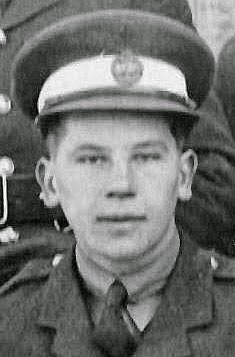
1898 Aug 25. Born Louth. Brother of S A Hardy
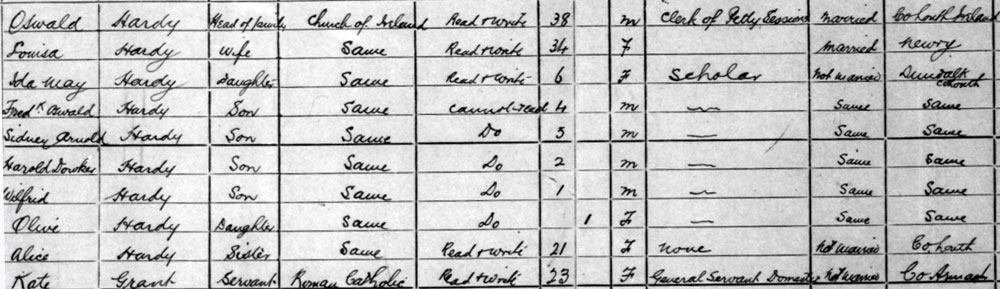
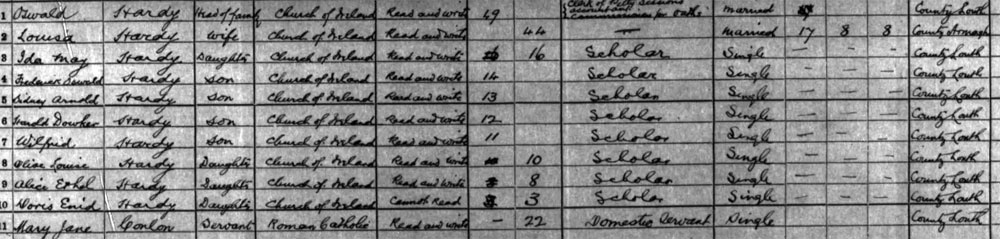
1911 census at 66 Barrack Street, Dundalk
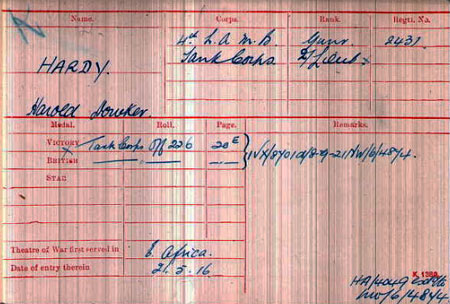
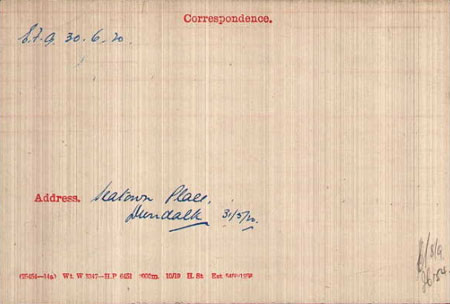
His military career started as a gunner in the highly mobile 4th Light Armoured Motor Battery, which joined the British East Africa Expeditionary Force, under the command of General Jan Smuts. The Tempest's Annual for 1916 describes him as "Gunner, Hardy, Harold D, Motor Machine Gun (Company). From Seatown Place, Dundalk." He probably received his training at the Motor Machine Gun Training Centre at Bisley Camp, Surrey, which lasted four months. As a gunner, he would certainly have received instruction and practice in firing the Vickers 303 machine gun. In addition, to basic training and fitness, he would have received driving lessons, tactical training, and ASC tuition in car maintenance.
1916 late April , From John Taylor's blog, the men of the 4th and 5th Light Armoured Motor Brigades sailed from Avonmouth with no idea of their destination due to tight security. The ship carried them along the western coast of Africa, calling at Cape Town, but it was not until they reached Durban that they were told of their mission in German East Africa, From Durban, the brigades sailed north to Mombasa. The entire journey was about 9800 nautical miles, which, at an estimated 15 knots, would have resulted in one month at sea.
1916 May 21. Landed East Africa. 4th East African Mounted Brigade
After disembarking at Kilindini Harbour, the 4th and 5th brigades went their separate ways. The 4th LAMB boarded a train of the Uganda Railway, and travelled 160 km. inland to Voi, where their armoured cars were waiting. The vehicles had been offloaded at Kilindini Harbour and shipped by rail earlier. From Voi they travelled toward the border separating German East Africa (Tanzania) from British East Africa (Kenya), stopping at Mbuyuni .The 4th then moved westward, crossing the foothills of Mt. Kilimanjaro, to Arusha . Rain hampered further progress as the heavy vehicles became frequently bogged down in the mud. From Arusha the brigade move southward in pursuit of the Germans. At Dodoma , they helped to seize control of the German-built Central Line Railway running from Dar-es-Salaam to Lake Tanganyika, then continued to push south to Iringa . At this juncture, news came through that the German force was sighted too far to the south, and it was decided to call off the pursuit, and allow allied forces in the South to move northward to engage them. So, the brigade returned to Dodoma, and the armoured cars were transported by rail to Kilosa. By the time the brigade reached Kilosa, it was judged to be medically unfit to stay in the country. The debilitating, and potentially deadly, trio of malaria, blackwater fever and yellow fever, along with dysentry, had taken its toll, and the 4th Brigade was at less than half strength.
1917 Apr 28 , The Dundalk Democrat, reported that Harold had developed a 'bad dose' of malaria, but that his condition was improving. From Kilosa, the remnants of 4th LAMB travelled to Dar-es-Salaam.
1917 Summer. The 4th Light Armoured Motor Brigade was disbanded .Elements of the brigade, including Harold, were shipped north via Aden to Egypt. The armoured cars were garaged in Cairo. After leaving Egypt, Harold went to England to train as an officer in the Tank Corps. This would have been an unsurprising move. Harold was already a gunner in the Motor Branch of the Machine Gun Corps (MGC), and tanks had formed the 'Heavy Branch' of the MGC, The Heavy Branch became the 'Tank Corps' on 28 July 1917. Harold's training would have been with the 24th Officer Cadet Battalion (Tank Corps) stationed at Hazeley Down, Twyford.
1918 Mar 27. Cadet to be temp 2nd Lt. Tank Corps. Harold Dowker Hardy
At the end of his training, Harold was assigned to the 13th (formerly M) Tank Battalion, which was transferred from England to the Western Front on 31 January 1918. In February 1918, the 13th Bn. was stationed at Bray-sur-Somme, but was unequipped. It formed part of the 5th Tank Brigade. However, due to heavy tank losses in the Spring Offensive, the 5th Brigade was temporarily disbanded, and the men of the 13th Battalion, now absorbed into the 4th Brigade, were formed into Lewis gun units (or detachments) on 13 April 1918 .
1918 Apr 16, these detachments were deployed to Boeschepe, and by 25th April, 13th Battalion became embroiled in the Second Battle of Kemmel Hill (part of the Battle of the Lys). This German attack was the opening of Operation Georgette, the second phase of Ludendorf's offensive. During this operation, the 13th Battalion suffered heavy casualties. Harold was lucky to be among the survivors. The situation began to improved during June and July as the new Mark V tanks began to arrive in number, enabling the tank brigades to rearm.
The reconstituted 5th Tank Brigade, which included Harold's 13th Battalion, was placed under the command of Brigadier General Anthony Courage, and its headquarters was established at Vaux en Amiénois. The 5th Brigade was assigned to support the Australian Corps. On 4 July 1918, the 5th Brigade took the Mark V into action for the first time at the Battle of Le Hamel.
By July 1918, Luddendorf's Offensive had run out of steam, and the Allies responded with a massive counter-attack, known as the Hundred Days Offensive. It opened on the 8th of August, with the Battle of Amiens , an attack made by more than 10 Allied divisions and more than 500 tanks. The onslaught took the Germans completely by surprise, and their losses were high, causing Ludendorf to refer to it as the "Black Day for the German Army". Harold's Mark V tank was among the 500 that went into battle. The advance continued the next day. and the 5th and 4th Tank Brigades attacked the front Framerville-Rosieres-Bouchoir with 89 tanks. It was at Vauvillers (Somme), on this front, that Harold and his crew were gassed.
1918 Aug 9 . Wins MC
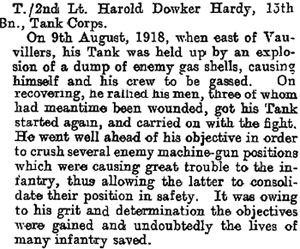
It is difficult to know how long Harold was out of action after being gassed, but the 13th Tank Battalion went on to fight at the Second Battle of Baupaume (21 August – 1 September 1918) ; the Battle of Epehy (18 September 1918) and the Battle of St. Quentin Canal (29 September – 10 October 1918). On 11 November the war ended, and the 13th Battalion (5th Tank Brigade) under command of Brig. Gen. H.K. Wood was assigned to the army of occupation in Germany during 1919. From 21 August 1918 to Armistice Day, some 2,400 men and officers of the Tank Corps were lost.
1920 Jun 4. Tank Corps. Temp. Lt. H. D. Hardy, M.C., relinquishes his commission on completion of service, and retains the rank of Lt
1920 Nov 18. Joined ADRIC with service no 1074. Posted to J Coy
1921 Jun 24 to 10 Jul on Leave
1922 Jan 23. Discharged on demobilisation of ADRIC
1923 Aug 25 Leaves for Australia. His address is given as Malton Rd, York I suspect he is travelling with another ex-Auxiliary of same address.
He was motivated to move to Australia, because his lungs had been damaged by poison gas, and he thought he would benefit from Australia's more benign climate. He appears to have been the first of the brothers to emigrate. Harold settled in Western Australia, living in and around Perth.
1926 Dec 30. Engaged to Nina Beresford Serjeant
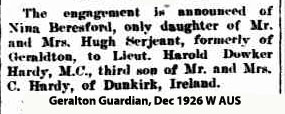
1927 Apr 16 Married Nina Beresford Serjeant
1931- 1980 on various Australian Electoral Rolls. He is a farmer. Wife Nina Beresford Hardy
1948 Nov 18 South Western Advertiser (Perth) reports his son's death
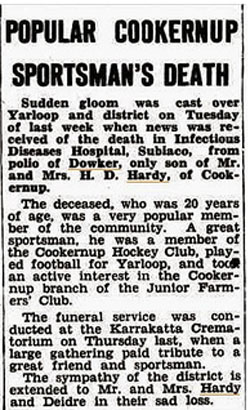
1985 Jul 1. Died Australia. Buried Karrakatta Cemetery Rose Garden, position 89, site 8E
I was sent substantial information by John Taylor